
 By Afrireport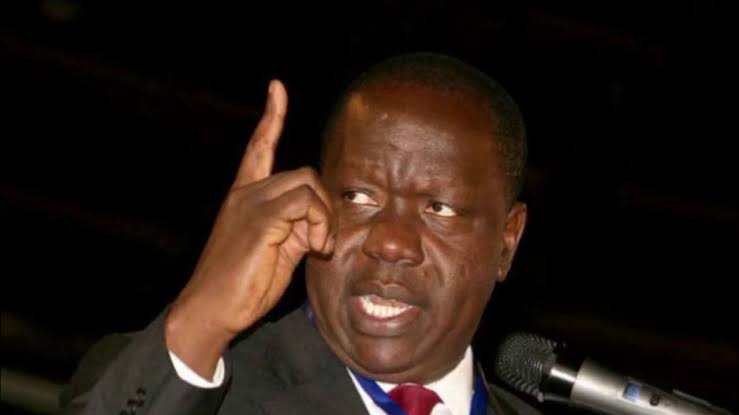
A familiar promise is returning to Kenya’s political arena, one that resonates deeply with millions of households across the country.
As political realignments take shape ahead of the next general election, healthcare has once again emerged as a defining campaign issue, touching on dignity, access and the role of the state in protecting its most vulnerable citizens.
Speaking during a public address, former Interior Cabinet Secretary Fred Matiang’i assured Kenyans that a future administration under his leadership would reinstate the Linda Mama program, a free maternity healthcare initiative that once provided critical support to expectant and new mothers across public health facilities.
I assure you that once we form the government, we will reinstate the Linda Mama program,” Matiang’i declared. “We are not new to government; we know what needs to be done.”
Also Read
- Bring Food and Water, Not Dust,’ Gachagua Tells Ruto
- “If Not Me, Then I’ll Support”, Gachagua Opens Door for Opposition Unity
- “We Are Not Visitors Here”: Gachagua Takes DCP Agenda to the Maasai Nation
- Cabinet Gives Green Light to Massive KSh4.7 Trillion 2026/27 Budget
- Gachagua Explodes: “I Backed Ruto When He Was Kalenjin , Don’t Call Me Tribal”
The Linda Mama program, introduced under the previous Jubilee administration, was designed to offer free maternal healthcare services, including antenatal care, delivery and postnatal services.
For many low income families, the program was a lifeline, reducing maternal deaths and easing the financial burden associated with childbirth.
However, its scaling down and eventual disruption left many women exposed to high medical costs and overstretched county health systems.
Matiang’i’s remarks signal a broader attempt to position himself as a leader of experience rather than experimentation.
By emphasising familiarity with government operations, he appeared to contrast his camp with what critics describe as policy uncertainty and inconsistent implementation in the current healthcare financing framework.
Health experts have repeatedly warned that the absence of a well funded maternity program has forced some women to delay seeking care or give birth at home, increasing risks for both mothers and newborns.
Counties have also struggled to absorb the costs previously covered under the national Linda Mama scheme, leading to service gaps in public hospitals.
Political analysts view Matiang’i’s pledge as a strategic move aimed at women voters and young families, a demographic increasingly vocal about the cost of living and access to essential services.
The promise also revives debate on whether healthcare reforms should prioritise targeted social programs or broader insurance based models.
As the political temperature rises, the reinstatement of Linda Mama is shaping up to be more than a campaign promise.
It has become a symbol of governance style one that prioritises direct state intervention in social welfare versus policy experimentation.
Whether the pledge will translate into concrete policy remains to be seen. But for millions of Kenyan mothers, the message is clear the battle over free maternity care is firmly back on the national agenda.
