
 By Afrireport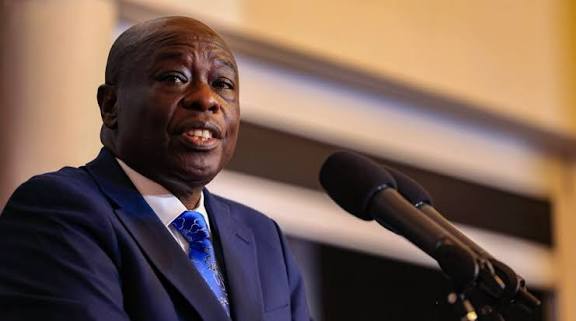
Former Deputy President Rigathi Gachagua has launched a fierce defence against accusations of tribal politics, declaring himself a patriot whose political journey has always been rooted in national unity rather than ethnicity.
Speaking with rare bluntness, Gachagua dismissed attempts to label him a “mkabila,” saying such claims are desperate tactics meant to silence dissent and distract Kenyans from real issues.
Gachagua challenged President William Ruto’s camp directly, reminding the country that his support for Ruto in the past cuts against the very narrative now being pushed.
If I were truly tribal,” he argued, “why would I have stood firmly with William Ruto when he was not Kikuyu but Kalenjin?” To Gachagua, this simple fact exposes what he calls a dishonest political strategy built on fear rather than truth.
According to the outspoken politician, ethnic branding has become a convenient weapon for those who feel threatened.
He suggested that his growing influence and ability to mobilise across regions has unsettled powerful figures within government.
Instead of engaging him politically or responding to his criticisms, he says, they have chosen to attack his character and paint him as divisive.
Gachagua insisted that Kenya’s future cannot be built on tribal arithmetic, warning that the country has suffered enough from leaders who exploit ethnicity for personal survival.
He said his current political posture is anchored on utangamano coexistence, inclusion and mutual respect among all communities.
Also Read
- Bring Food and Water, Not Dust,’ Gachagua Tells Ruto
- “If Not Me, Then I’ll Support”, Gachagua Opens Door for Opposition Unity
- “We Are Not Visitors Here”: Gachagua Takes DCP Agenda to the Maasai Nation
- Cabinet Gives Green Light to Massive KSh4.7 Trillion 2026/27 Budget
- Gachagua Explodes: “I Backed Ruto When He Was Kalenjin , Don’t Call Me Tribal”
In his view, national cohesion is not a slogan but a deliberate political choice that requires courage, honesty, and sacrifice.
The former DP also accused the ruling establishment of hypocrisy, arguing that those shouting the loudest about tribalism are often the same individuals who quietly practise it behind closed doors.
He claimed that political loyalty in the current administration is increasingly being measured by silence and submission, not competence or integrity.
By framing himself as a nationalist rather than a tribal kingpin, Gachagua appears to be positioning his movement as a broader alternative to ethnic based politics.
His message is clear: leadership should unite Kenyans around shared struggles the cost of living, jobs, corruption and justice instead of reducing citizens to surnames and communities.
As the political temperature rises, Gachagua’s remarks are likely to resonate with a population fatigued by recycled ethnic narratives.
Whether his call for unity translates into a durable national coalition remains to be seen, but one thing is certain he is no longer playing defence.
He is redefining the battlefield and daring his critics to meet him there, without hiding behind tribe.
